Buy udise.com ?
We are moving the project
udise.com .
Are you interested in purchasing the domain
udise.com ?
domain@kv-gmbh.de · 0541-91531010
Buy udise.com ?
What is a temporal clause?
A temporal clause is a type of subordinate clause that provides information about when an action takes place in relation to the main clause. It usually includes a time-related word or phrase, such as "when," "while," "after," "before," or "since." Temporal clauses help to clarify the timing of events in a sentence and are commonly used in complex sentences to show the sequence of actions. **
What is the temporal context?
The temporal context refers to the time period or timeframe in which an event, situation, or piece of information occurs or is relevant. It helps to provide a framework for understanding the sequence of events and the historical or current significance of a particular topic. Understanding the temporal context is important for interpreting and analyzing information accurately within its historical or current timeframe. **


Similar search terms for Temporal
Top-Angebote
Products related to Temporal:
-
Shop Station Blanket Math Formula Blanket Science Throw For Students Teachers & Physics Lovers black 28x39inWrap yourself in comfort while celebrating your passion for science with this STEM blanket. Designed with eyecatching mathematical and physics formulas, this ultrasoft math formula blanket adds personality to your bedroom, sofa, or dorm while...64,97 $*Shipping: 0,00 $Secure redirect to the provider
-
OXFORD UNIVERSITY PRESS Oxford English Thesaurus For SchoolsThe Oxford English Thesaurus for Schools is easy to use with its accessible layout, making it the perfect language resource for school work and studying at home. Fully updated, it delivers a wide vocabulary with excellent coverage of curriculum words, for example cell and fraction, as well new words on topics such as technology, health and the environment. It also provides context with age-appropriate example sentences, from the best children's books and teenage fiction, to show students how to use language most effectively. It is powered by the Oxford Children's Corpus, a unique electronic database of millions of words written by and for children, which means that the vocabulary is presented in a way that is both accessible and stretching. It gives hands-on support to young writers, with a unique toolkit on writing skills, including word webs, special synonyms, overused words panels, writing tips panels, and usage notes. It also includes a new section on creative writing drawing on the 500 words to support students with their own writing. This is the ideal resource to use when preparing for the Spoken Language Study and the English Language objectives of the GCSE specifications for KS3-4, and where permitted, is ideal for taking in to Controlled Assessments, along with the companion Oxford English Dictionary for Schools. Free downloadable learning resources, word games, puzzles, and much more are available for additional online support at www.oxforddictionaries.com/schools9,49 £*Shipping: 2,99 £Secure redirect to the provider
-
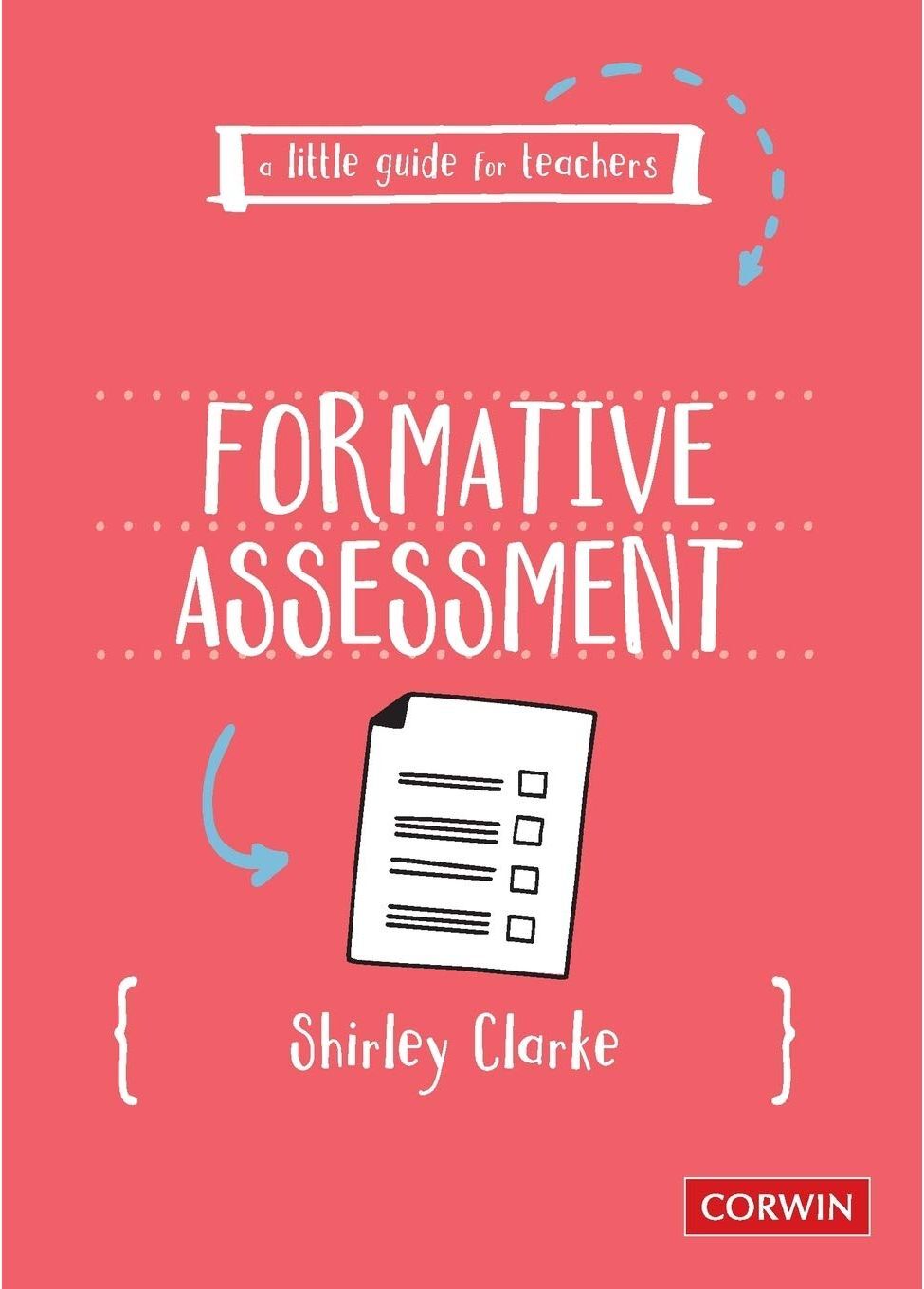
SAGE Publications A Little Guide for Teachers: Formative Assessment (A Little Guide for Teachers)Bridging the gap between research and practice A Little Guide for Teachers: Formative Assessment gives teachers practical tried and tested strategies to put formative assessment into action in their classrooms. The Little Guide for Teachers series is little in size but BIG on all the support and inspiration you need to navigate your day to day life as a teacher. · Authored by experts in the field · Easy to dip in-and-out of · Interactive activities encourage you to write into the book and make it your own · Fun engaging illustrations throughout · Read in an afternoon or take as long as you like with it!12,99 £*Shipping: 2,99 £Secure redirect to the provider
-
Usborne Growing Up For Boys Schools Bullies Music Sports Girls StressBody Changes; brain changes; shaving; self-confidence; exercise; healthy eating; social networking; sexuality; drugs; drink; power; responsibility; hormones; feelings; friends; relationships; break-ups; contraception; STI's; stress; bullying exams...PANIC ALLERT! Don't worry; it's all going to be OK. Just keep calm and carry on reading... This book covers everything you need to know to get through the ups and downs of teenage life. Related Tags: Usborne, Usbourne3,89 £*Shipping: 1,99 £Secure redirect to the provider



-
What does the term "temporal error" mean?
Temporal error refers to a mistake or discrepancy that occurs in relation to time. It can occur when there is a mismatch between the timing of events or actions, leading to inaccuracies or inconsistencies in the temporal sequence. In computing, temporal errors can occur when there are issues with the timing or synchronization of processes, resulting in incorrect outcomes or behaviors. Identifying and addressing temporal errors is important to ensure the accuracy and reliability of systems and processes. **
-
How are temporal clauses formed in Latin?
Temporal clauses in Latin are formed using subordinating conjunctions such as "cum" (when), "postquam" (after), "dum" (while), and "antequam" (before). These conjunctions are followed by a verb in the subjunctive mood to indicate that the action of the temporal clause is dependent on the action of the main clause. For example, "cum veniat" means "when he/she comes" and "postquam viderit" means "after he/she sees." These temporal clauses are used to express the time relationship between two actions or events. **
-
How do you form temporal clauses in French?
Temporal clauses in French are formed using subordinating conjunctions such as "quand" (when), "pendant que" (while), "dès que" (as soon as), "avant que" (before), "après que" (after), etc. These subordinating conjunctions are followed by a subject and a verb in the subjunctive mood if the action in the temporal clause has not yet occurred, or in the indicative mood if the action has already taken place. Temporal clauses are used to indicate the timing or sequence of events in relation to the main clause. **
-
Is there actually a temporal version of homesickness?
Yes, there is a temporal version of homesickness known as "time-sickness." Time-sickness is the feeling of longing for a specific time period in the past, such as childhood or a significant moment in one's life. It can be triggered by nostalgia or a desire to relive happy memories from the past. Time-sickness can lead to feelings of sadness, yearning, and a sense of disconnection from the present moment. **

Can there be simultaneous spatial and temporal summation?
Yes, simultaneous spatial and temporal summation can occur. Spatial summation refers to the combination of signals from different locations on a neuron's dendrites, while temporal summation involves the combination of signals arriving at different times. Both types of summation can occur simultaneously, with multiple signals from different locations and at different times converging to trigger an action potential in a neuron. This allows for the integration of spatially and temporally distributed inputs to generate a coordinated response. **
What are the temporal prepositions for "in" and "nach"?
The temporal preposition for "in" is typically used for future time expressions, such as "in einer Woche" (in a week) or "in zwei Monaten" (in two months). On the other hand, the temporal preposition for "nach" is used for time expressions that refer to events happening after a certain point in time, such as "nach dem Abendessen" (after dinner) or "nach der Schule" (after school). **
Top-Angebote
Products related to Temporal:
-
Uplifted Finds Retro Macintosh Aesthetic Clock & Technical Temporal Desktop Logic Retro Macintosh Aesthetic Clock & Technical Temporal Desktop LogicInaugurate a powerful ChronosSanctuary energy for your digital environment with the ultimate 2026 boutiqueintegrated temporal solution. The Retro Macintosh Aesthetic Clock is the premier choice for creating a TechnicalModern or StudioLuxe atmosphere...212,97 $*Shipping: 0,00 $Secure redirect to the provider
-
SAGE Publications A Little Guide for Teachers: Diversity in Schools (A Little Guide for Teachers)A Little Guide for Teachers: Diversity in Schools aims to provide starting points for teachers and leaders in creating a curriculum, either across disciplines or within subjects, that is as deep and diverse as their students. The Little Guide for Teachers series is little in size but BIG on all the support and inspiration you need to navigate your day to day life as a teacher. · Authored by experts in the field · Easy to dip in-and-out of · Interactive activities encourage you to write into the book and make it your own · Fun engaging illustrations throughout · Read in an afternoon or take as long as you like with it!12,99 £*Shipping: 2,99 £Secure redirect to the provider
-
Shop Station Blanket Math Formula Blanket Science Throw For Students Teachers & Physics Lovers black 28x39inWrap yourself in comfort while celebrating your passion for science with this STEM blanket. Designed with eyecatching mathematical and physics formulas, this ultrasoft math formula blanket adds personality to your bedroom, sofa, or dorm while...64,97 $*Shipping: 0,00 $Secure redirect to the provider
-
OXFORD UNIVERSITY PRESS Oxford English Thesaurus For SchoolsThe Oxford English Thesaurus for Schools is easy to use with its accessible layout, making it the perfect language resource for school work and studying at home. Fully updated, it delivers a wide vocabulary with excellent coverage of curriculum words, for example cell and fraction, as well new words on topics such as technology, health and the environment. It also provides context with age-appropriate example sentences, from the best children's books and teenage fiction, to show students how to use language most effectively. It is powered by the Oxford Children's Corpus, a unique electronic database of millions of words written by and for children, which means that the vocabulary is presented in a way that is both accessible and stretching. It gives hands-on support to young writers, with a unique toolkit on writing skills, including word webs, special synonyms, overused words panels, writing tips panels, and usage notes. It also includes a new section on creative writing drawing on the 500 words to support students with their own writing. This is the ideal resource to use when preparing for the Spoken Language Study and the English Language objectives of the GCSE specifications for KS3-4, and where permitted, is ideal for taking in to Controlled Assessments, along with the companion Oxford English Dictionary for Schools. Free downloadable learning resources, word games, puzzles, and much more are available for additional online support at www.oxforddictionaries.com/schools9,49 £*Shipping: 2,99 £Secure redirect to the provider
-
What is a temporal clause?
A temporal clause is a type of subordinate clause that provides information about when an action takes place in relation to the main clause. It usually includes a time-related word or phrase, such as "when," "while," "after," "before," or "since." Temporal clauses help to clarify the timing of events in a sentence and are commonly used in complex sentences to show the sequence of actions. **
-
What is the temporal context?
The temporal context refers to the time period or timeframe in which an event, situation, or piece of information occurs or is relevant. It helps to provide a framework for understanding the sequence of events and the historical or current significance of a particular topic. Understanding the temporal context is important for interpreting and analyzing information accurately within its historical or current timeframe. **
-
What does the term "temporal error" mean?
Temporal error refers to a mistake or discrepancy that occurs in relation to time. It can occur when there is a mismatch between the timing of events or actions, leading to inaccuracies or inconsistencies in the temporal sequence. In computing, temporal errors can occur when there are issues with the timing or synchronization of processes, resulting in incorrect outcomes or behaviors. Identifying and addressing temporal errors is important to ensure the accuracy and reliability of systems and processes. **
-
How are temporal clauses formed in Latin?
Temporal clauses in Latin are formed using subordinating conjunctions such as "cum" (when), "postquam" (after), "dum" (while), and "antequam" (before). These conjunctions are followed by a verb in the subjunctive mood to indicate that the action of the temporal clause is dependent on the action of the main clause. For example, "cum veniat" means "when he/she comes" and "postquam viderit" means "after he/she sees." These temporal clauses are used to express the time relationship between two actions or events. **
Similar search terms for Temporal
-
SAGE Publications A Little Guide for Teachers: Formative Assessment (A Little Guide for Teachers)Bridging the gap between research and practice A Little Guide for Teachers: Formative Assessment gives teachers practical tried and tested strategies to put formative assessment into action in their classrooms. The Little Guide for Teachers series is little in size but BIG on all the support and inspiration you need to navigate your day to day life as a teacher. · Authored by experts in the field · Easy to dip in-and-out of · Interactive activities encourage you to write into the book and make it your own · Fun engaging illustrations throughout · Read in an afternoon or take as long as you like with it!12,99 £*Shipping: 2,99 £Secure redirect to the provider
-
Usborne Growing Up For Boys Schools Bullies Music Sports Girls StressBody Changes; brain changes; shaving; self-confidence; exercise; healthy eating; social networking; sexuality; drugs; drink; power; responsibility; hormones; feelings; friends; relationships; break-ups; contraception; STI's; stress; bullying exams...PANIC ALLERT! Don't worry; it's all going to be OK. Just keep calm and carry on reading... This book covers everything you need to know to get through the ups and downs of teenage life. Related Tags: Usborne, Usbourne3,89 £*Shipping: 1,99 £Secure redirect to the provider
-
Scholastic Thank You, Teachers (Hardcover) - James PattersonThe son of a teacher himself, the world's #1 bestselling author James Patterson blows the lid off what is happening in today's schools with firsthand stories, highlighting the heroic efforts of the world's teachers.Teachers are the heroes we too...28,00 $*Shipping: 0,00 $Secure redirect to the provider
-
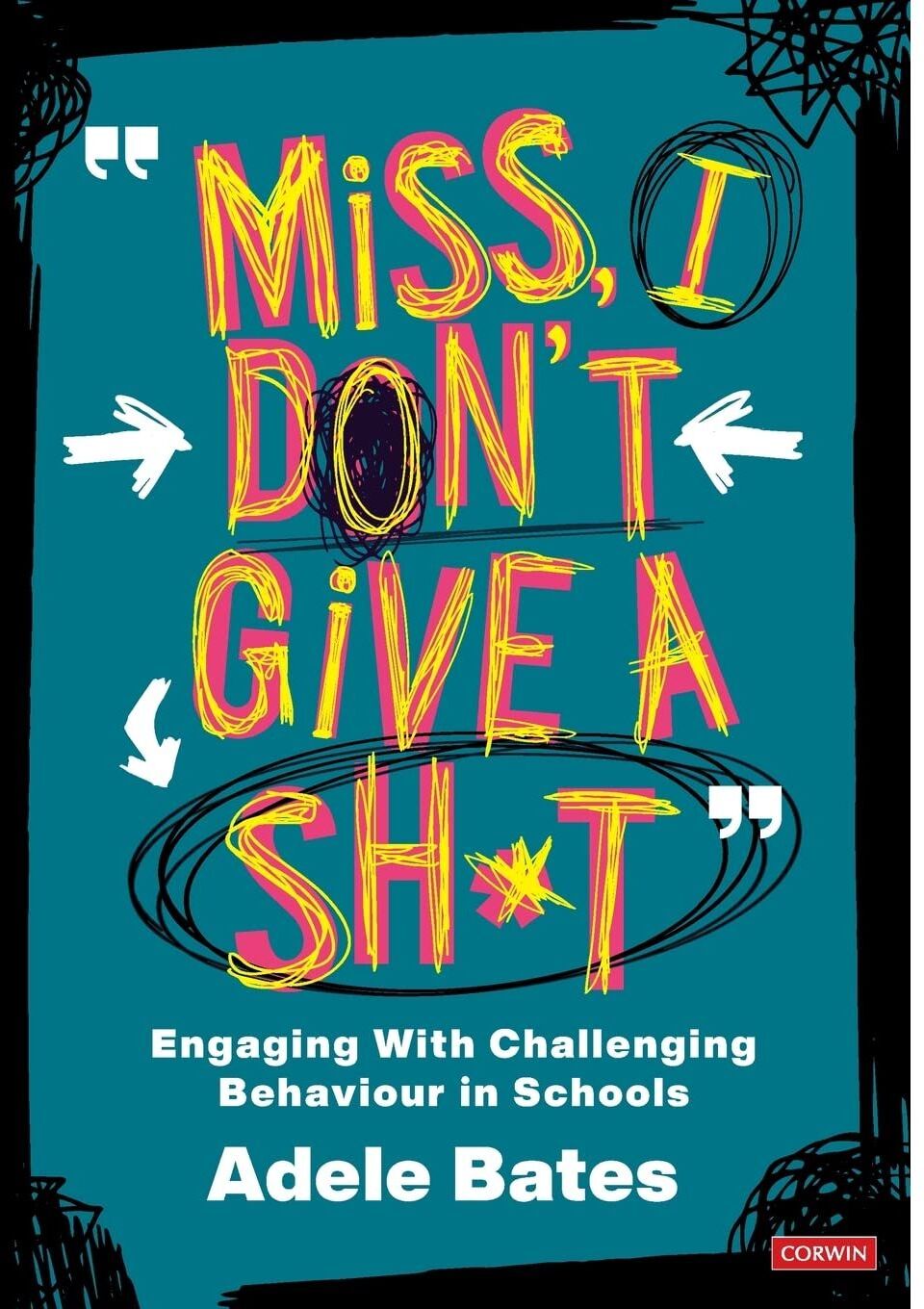
SAGE Publications Miss, I dont give a sh*t : Engaging with challenging behaviour in schoolsDo you want to be an inspiring teacher for everyone you teach, even the trickier cherubs in your class? Or maybe you just want to get through a lesson without a desk flying at you or a blazer being set alight? In this down-to-earth book Adele Bates shares practical approaches, strategies and tips from the classroom on how to help pupils with behavioural needs thrive with their education. Packed full of real-life classroom scenarios, student voice and relevant theory, every chapter offers an Action Box helping you to implement these strategies – next lesson, next week and long term. From relationship building and teaching self-regulation, to fostering inclusivity, paying attention to your own self-care and schoolwide approaches, Adele Bates unpicks some of the most difficult aspects of being a teacher and empowers you to grow as a confident classroom professional.15,69 £*Shipping: 2,99 £Secure redirect to the provider
-
How do you form temporal clauses in French?
Temporal clauses in French are formed using subordinating conjunctions such as "quand" (when), "pendant que" (while), "dès que" (as soon as), "avant que" (before), "après que" (after), etc. These subordinating conjunctions are followed by a subject and a verb in the subjunctive mood if the action in the temporal clause has not yet occurred, or in the indicative mood if the action has already taken place. Temporal clauses are used to indicate the timing or sequence of events in relation to the main clause. **
-
Is there actually a temporal version of homesickness?
Yes, there is a temporal version of homesickness known as "time-sickness." Time-sickness is the feeling of longing for a specific time period in the past, such as childhood or a significant moment in one's life. It can be triggered by nostalgia or a desire to relive happy memories from the past. Time-sickness can lead to feelings of sadness, yearning, and a sense of disconnection from the present moment. **
-
Can there be simultaneous spatial and temporal summation?
Yes, simultaneous spatial and temporal summation can occur. Spatial summation refers to the combination of signals from different locations on a neuron's dendrites, while temporal summation involves the combination of signals arriving at different times. Both types of summation can occur simultaneously, with multiple signals from different locations and at different times converging to trigger an action potential in a neuron. This allows for the integration of spatially and temporally distributed inputs to generate a coordinated response. **
-
What are the temporal prepositions for "in" and "nach"?
The temporal preposition for "in" is typically used for future time expressions, such as "in einer Woche" (in a week) or "in zwei Monaten" (in two months). On the other hand, the temporal preposition for "nach" is used for time expressions that refer to events happening after a certain point in time, such as "nach dem Abendessen" (after dinner) or "nach der Schule" (after school). **
* All prices are inclusive of VAT and, if applicable, plus shipping costs. The offer information is based on the details provided by the respective shop and is updated through automated processes. Real-time updates do not occur, so deviations can occur in individual cases. ** Note: Parts of this content were created by AI.